Why Your Fights Keep Getting Worse (And What to Do About It)
Today’s blog is an excerpt from Ly Tran’s new book: Conflicted
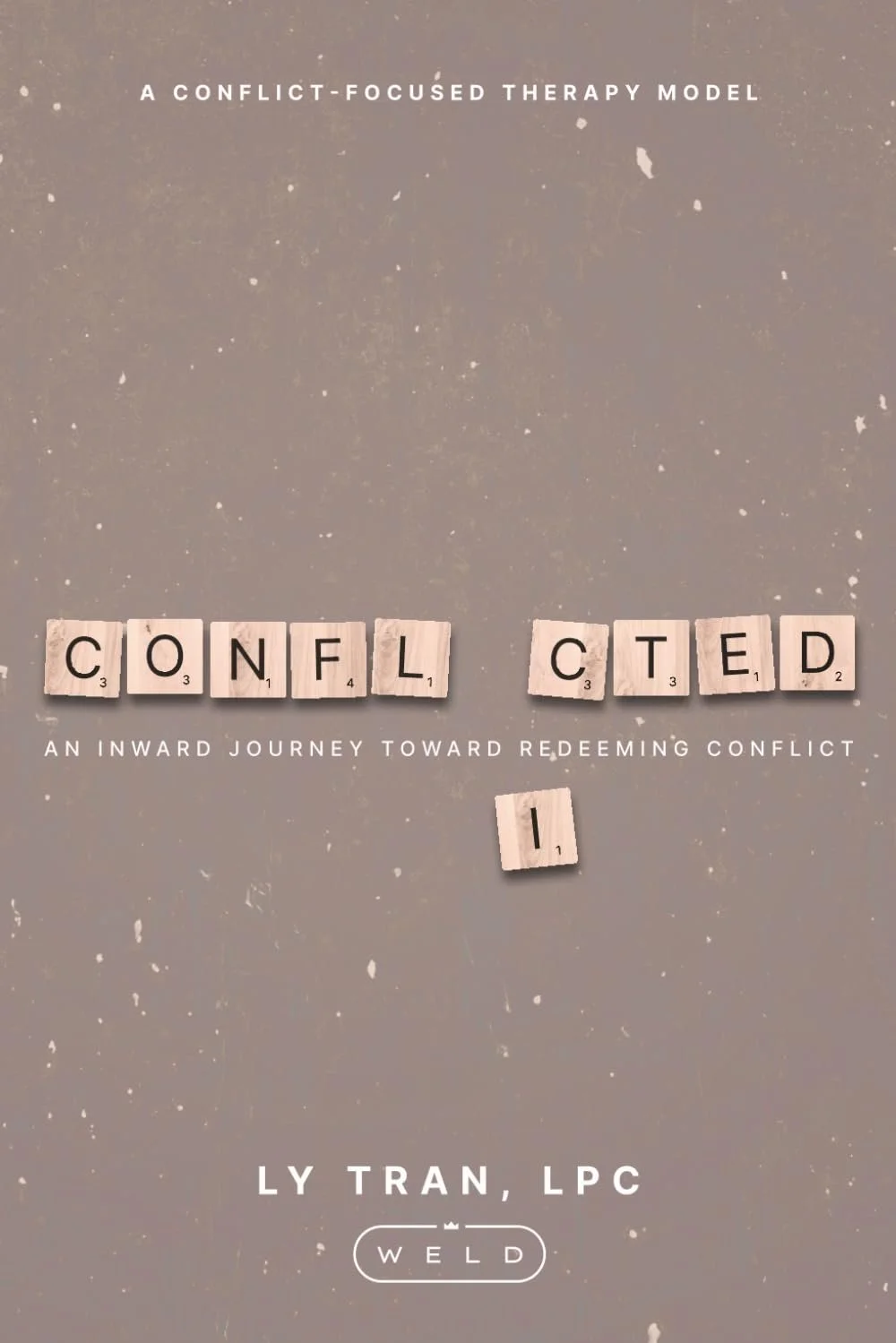
A Conflict-Focused Therapy Model by Ly Tran, LPC
It started with a voicemail.
His mom’s tone was upbeat on the surface, but laced with something heavier underneath. She’d made his favorite meal, mentioned he was “busy again,” and signed off with a breezy “call me back.” By the time James heard it, he’d already survived a brutal day. The voicemail shouldn’t have mattered. But something in her voice hit a nerve.
He didn’t call back. She texted the next morning: “I don’t know why you bother saying ‘family matters’ if you never show up.”
That did it.
The phone call that followed was a masterclass in escalation. Within minutes, James was accusing his mom of guilt-tripping. She was insisting she just wanted to see her son. He said she was controlling. She said he was ungrateful. By the time she hung up, both were shaking. His heart was pounding. Her hands were trembling. Neither felt heard. Both felt wronged.
And the silence that followed wasn’t peace. It was a ceasefire full of landmines, waiting for the next time.
Sound Familiar?
If you’ve ever watched a small disagreement spiral into a full-blown argument and wondered how you got there, you’re not alone. This kind of conflict, what I call “ugly conflict,” is one of the most common patterns I see in my therapy practice. And it’s one of the most misunderstood.
Ugly conflict isn’t just about two people disagreeing. It’s about what happens when your brain’s threat-detection system takes over. Therapists call this “flooding” — when your amygdala kicks into fight mode and overwhelms your ability to stay rational, compassionate, or constructive. Adrenaline hijacks your body. You’re no longer responding. You’re reacting. You say things you regret. You raise your voice. You slam a door. Or you shut down entirely.
In the moment, those reactions might feel justified. Even powerful. But they almost always leave behind shame, regret, and an eroded sense of trust.
What Actually Makes a Fight “Ugly”
Intensity alone doesn’t make conflict ugly. Passion, emotion, even raised voices can be part of healthy engagement. What makes conflict ugly is the collapse of safety. When a conversation crosses from “I’m upset” into territory where one or both people feel emotionally or physically unsafe, it’s no longer a pathway to connection. It’s become a weapon.
And here’s what I tell my clients: what doesn’t get repaired gets repeated. Ugly conflict isn’t a one-time event. It’s a cycle. The fight ends, but the pain lingers. Nothing gets resolved. And the next time tension rises, you’re starting from a worse place than before, because now there’s fresh damage layered on top of old wounds.
Why Your Brain Keeps Pulling You Back In
One of the most frustrating things about ugly conflict is how automatic it feels. You know yelling won’t help. You know shutting down makes it worse. But in the heat of the moment, your body moves faster than your brain.
That’s because volatile conflict literally rewires your nervous system. When you’ve experienced it enough times, whether in your family growing up or in adult relationships, your body learns to treat every disagreement as a threat. Your internal narrative becomes something like: “People close to me can’t be trusted.” Or “If I engage, I have to win or I’ll be destroyed.”
These beliefs aren’t conscious decisions. They’re survival instincts. And because your brain doesn’t record memories clearly when it’s in fight-or-flight mode, you and the other person often walk away from the same argument with completely different versions of what happened. It’s not dishonesty. It’s neurology.
The BJJ Principle: Control Before Combat
I train in Brazilian Jiu-Jitsu, and it’s taught me more about conflict than most therapy textbooks. When white belts first start sparring, they flail. Adrenaline hits, and they move wildly and unpredictably. They’re dangerous, not because they’re malicious, but because they haven’t learned control.
That’s what ugly conflict looks like. Two untrained people flooding each other with reactive emotion, no structure, no regulation, no safety.
In BJJ, you learn to control yourself before you try to control the situation. You learn to breathe, to find your base, to move with intention. The principle is “position before submission” — you don’t go for the win until you’ve established stability.
Conflict works the same way. Until you learn to regulate your own nervous system, every argument will be a sparring match between two white belts. And somebody’s going to get hurt.
What You Can Do Right Now
If you recognize this pattern in your own life, here are three things you can start practicing today:
1. Name the flood before it takes over.
When you feel your heart rate spike, your jaw clench, or your voice sharpen, that’s your body signaling that you’re leaving the rational zone. Name it out loud if you can: “I’m getting flooded. I need a minute.” This isn’t retreating. It’s tactical. You’re choosing to pause before you do damage.
2. Ask yourself: “What am I really afraid of right now?”
Behind most explosive reactions is a quieter emotion: fear of rejection, fear of being controlled, fear of not mattering. If you can get curious about the fear underneath the anger, you’ll often find the real issue. And that’s where productive conversations begin.
3. Repair quickly, even if it’s imperfect.
You don’t need to have the whole thing figured out before you circle back. A simple “I’m sorry for how that came out. Can we try again?” can interrupt the cycle. Repair doesn’t mean the conflict is over. It means you’re choosing connection over destruction.
The truth is, most of us aren’t afraid of conflict because we’re weak. We’re afraid because we’ve been hurt by it. But there’s a better way to fight. Not to dominate. Not to avoid. But to engage with enough skill and self-awareness that the fight actually leads somewhere good.
That’s what I help people learn every day in my practice. And it starts with understanding what’s really happening when your fights keep getting worse.
If this resonates and you’d like to explore it with a therapist, we’d love to help. Book a free 15-minute consultation.