Understanding IFS Therapy: A Gentle Approach to Healing
Many people begin therapy because they feel stuck in patterns they do not fully understand. You might notice yourself reacting strongly in certain situations, feeling pulled in different emotional directions, or struggling with an inner critic that feels hard to quiet. Internal Family Systems therapy, commonly known as IFS, offers a compassionate way to understand these experiences without labeling them as flaws or failures.
Rather than focusing on what is “wrong,” IFS helps people explore what is happening inside with curiosity and care. It provides a framework for understanding emotional pain, inner conflict, and healing in a way that feels respectful and empowering.
What Is IFS Therapy?
Internal Family Systems therapy is a well-established, evidence-based approach to psychotherapy. It is based on the idea that the mind is made up of different parts, much like members of a family. Each part has its own role, feelings, and intentions, even when those intentions are not immediately obvious.
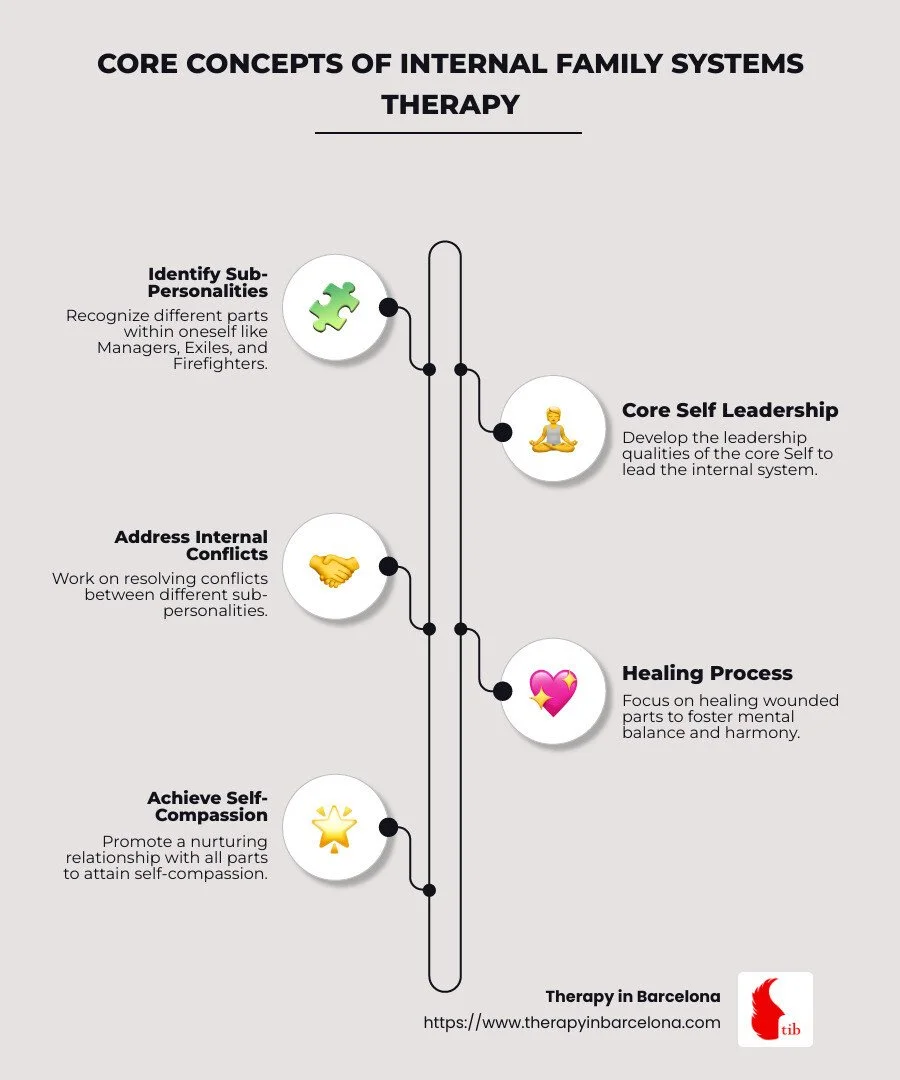
IFS does not view these parts as problems to eliminate. Instead, it sees them as protective responses shaped by life experiences. At the center of this system is what IFS calls the Self. The Self represents your natural capacity for calm, clarity, compassion, and confidence.
When people are connected to their Self, they often feel more grounded and less reactive. IFS therapy helps strengthen access to this Self energy so healing can happen from a place of inner leadership rather than self-criticism.
Understanding the Core Idea of “Parts”
Many people intuitively recognize the idea of having different sides of themselves. You might say things like, “Part of me wants to try, but part of me is scared,” or “I know what I should do, but something holds me back.” IFS therapy takes this everyday experience seriously and explores it in a structured, supportive way.
Each part has a reason for existing. Even parts that create distress often developed to protect you at some point in your life. IFS therapy helps uncover those reasons with curiosity instead of judgment.
The Three Main Types of Parts in IFS
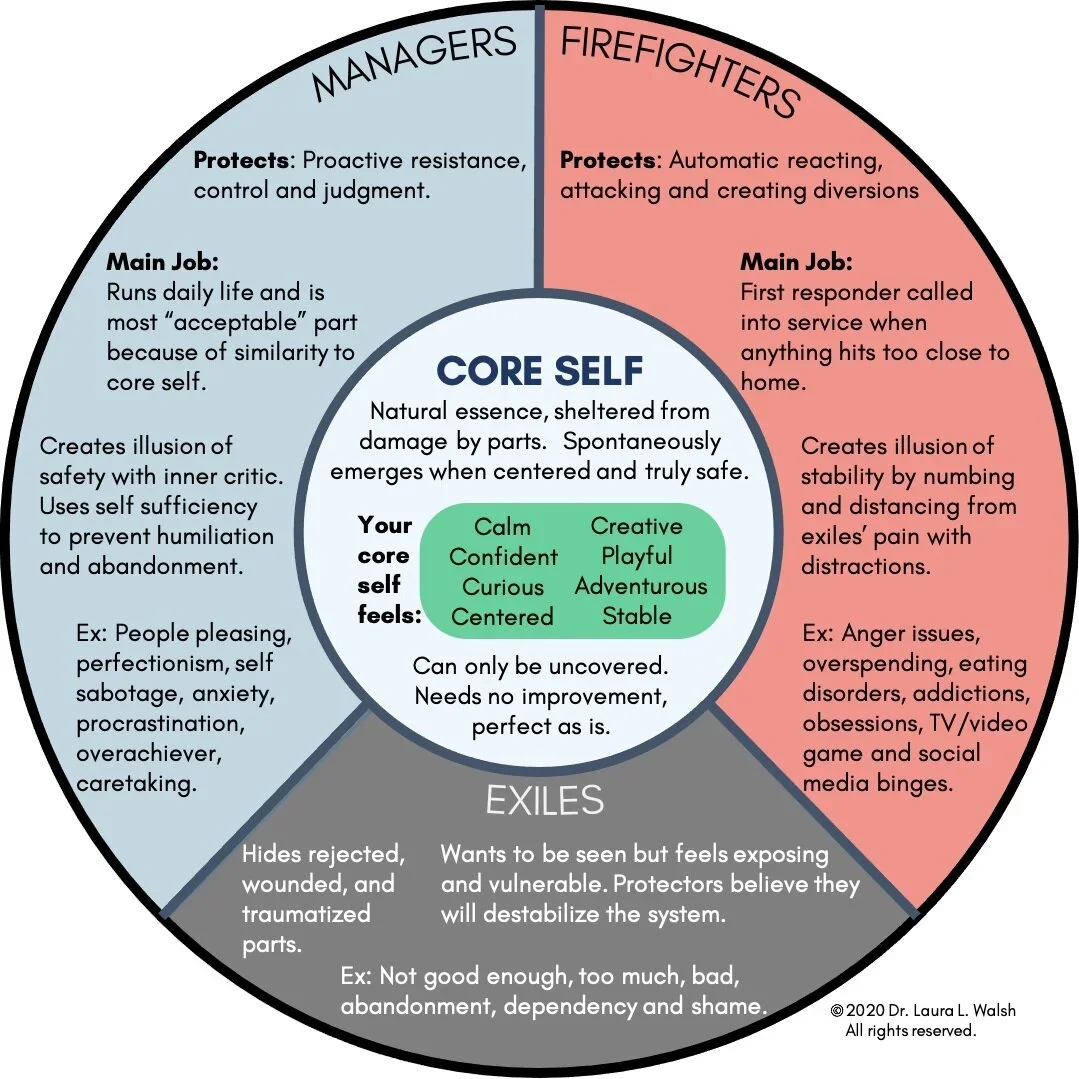
IFS groups inner parts into three main categories. Understanding these categories can make emotional experiences feel less confusing and more manageable.
Manager Parts
Manager parts work to keep life under control and prevent pain from surfacing. They often show up in ways that seem productive on the surface but can feel exhausting over time.
Examples of manager behaviors include:
Perfectionism or overworking
Avoiding vulnerability
Constant planning or overthinking
People-pleasing
Emotional detachment
Managers usually believe they are helping. Their goal is often to keep deeper pain from being triggered.
Firefighter Parts
Firefighter parts react when emotions become overwhelming. Their job is to quickly reduce distress, even if their methods are not ideal long term.
Firefighters may show up as:
Emotional shutdown or numbing
Impulsive behaviors
Overuse of distractions like screens or substances
Sudden anger or withdrawal
These parts are not trying to cause harm. They are responding to a sense of urgency and often step in when other strategies feel insufficient.
Exile Parts
Exile parts hold the emotional wounds from earlier experiences, often from childhood or significant relationships. These parts may carry feelings such as shame, fear, sadness, or loneliness.
Because these emotions can feel intense, other parts work hard to keep exiles hidden. IFS therapy creates a safe way to gradually connect with these parts without becoming overwhelmed.
What Makes IFS Therapy a Gentle Approach
One of the reasons IFS therapy feels gentle is that it does not rush the healing process. There is no pressure to revisit painful memories before you feel ready. Therapy moves at the pace of your internal system.
IFS emphasizes:
Respect for protective parts
Choice and consent in the healing process
Emotional safety and stability
Collaboration between therapist and client
This approach can feel especially supportive for people who have experienced trauma or who feel easily overwhelmed in traditional talk therapy.
What an IFS Therapy Session Looks Like
IFS therapy sessions are guided but flexible. A therapist may help you notice sensations, emotions, or thoughts and gently explore which parts are present.
A session might include:
Identifying a part connected to a current issue
Getting curious about what that part does and why
Building trust with protective parts
Allowing the Self to lead the conversation
Offering compassion to parts that carry pain
You are always in control of what you explore. The therapist supports you in staying grounded and connected to Self energy throughout the process.
IFS Therapy and Emotional Regulation
Many people seek therapy because emotions feel intense or unpredictable. IFS helps improve emotional regulation by strengthening the relationship between the Self and various parts.
Rather than trying to suppress emotions, IFS encourages listening to them. Over time, parts often relax once they feel understood and supported. This can lead to fewer emotional extremes and a greater sense of inner balance.
IFS Therapy and Trauma Recovery
IFS is widely recognized as a trauma-informed approach. It does not require reliving traumatic events in detail. Instead, it focuses on building safety, trust, and internal resources before addressing deeper wounds.
This makes IFS particularly helpful for individuals who:
Have experienced childhood trauma
Feel easily overwhelmed by emotions
Have tried therapy before without feeling safe
Struggle with shame or self-blame
Healing happens through connection and compassion, not force.
How IFS Therapy Supports Relationships
IFS therapy does not only improve the relationship you have with yourself. Many people notice positive changes in their relationships with others as well.
As internal conflict decreases, people often experience:
Clearer communication
Healthier boundaries
Less reactivity during conflict
Greater empathy for themselves and others
By understanding your own parts, it becomes easier to respond thoughtfully rather than react emotionally.
Who Can Benefit From IFS Therapy?
IFS therapy can support a wide range of emotional and relational concerns. It may be especially helpful if you feel conflicted internally or frustrated by repeating patterns.
People often seek IFS therapy for:
Anxiety and chronic worry
Depression or emotional numbness
Grief and loss
Relationship difficulties
Low self-worth or inner criticism
Life transitions
Faith-related or identity struggles
IFS can be adapted for individuals, couples, and even family work.
What Progress Can Look Like Over Time
Progress in IFS therapy is often gradual and meaningful. Rather than dramatic shifts, people notice subtle changes that build over time.
These may include:
Feeling more compassion toward yourself
Less internal pressure or self-criticism
Improved emotional awareness
Greater confidence in decision-making
A deeper sense of calm and clarity
Many clients describe feeling more whole and less divided internally.
Beginning IFS Therapy
Starting IFS therapy does not require you to have everything figured out. Curiosity and openness are enough. Sessions can take place in person or through telehealth, making therapy accessible and flexible.
IFS therapy offers a path toward healing that honors your experiences and respects your inner world. It invites you to move toward yourself rather than away from difficult emotions.
A Compassionate Path Forward
Internal Family Systems therapy reminds us that healing does not come from eliminating parts of ourselves. Instead, it comes from understanding, compassion, and connection. Every part has a story, and every story deserves to be heard.
For many people, IFS therapy becomes a way not just to cope, but to develop a deeper, more trusting relationship with themselves. Healing becomes less about fixing and more about listening, caring, and leading with Self.